
Aluminum vs Stainless for CNC Machining China Factory Orders: A Decision Table
A DFM review can only recommend the right machine, the right tool, and the right finish after the material decision is made, which is why aluminum-versus-stainless is the first question, not the last one. On a China machining factory order, the two metals diverge in stock price, cutting speed, finishing path, and verification burden, and each divergence lands on the quote. This guide turns the comparison into a decision table a factory engineer can read: the criteria that separate the metals, and the grades worth naming on each side. It also shows what the design-for-manufacturing review and the material verification chain should prove before the choice becomes a batch.
Why does the material choice arrive before the DFM review can do its job?
Design-for-manufacturability is only as useful as the inputs it is given, and the grade is the first input. The same geometry in 6061-T6 aluminum and in 304 stainless triggers different DFM conversations: different feeds and tooling, different minimum wall thicknesses, different finish allowances, different cost floors. A factory that reviews a drawing labeled "aluminum" instead of "6061-T6" is reviewing a guess, and a review of a guess produces a quote for a guess.
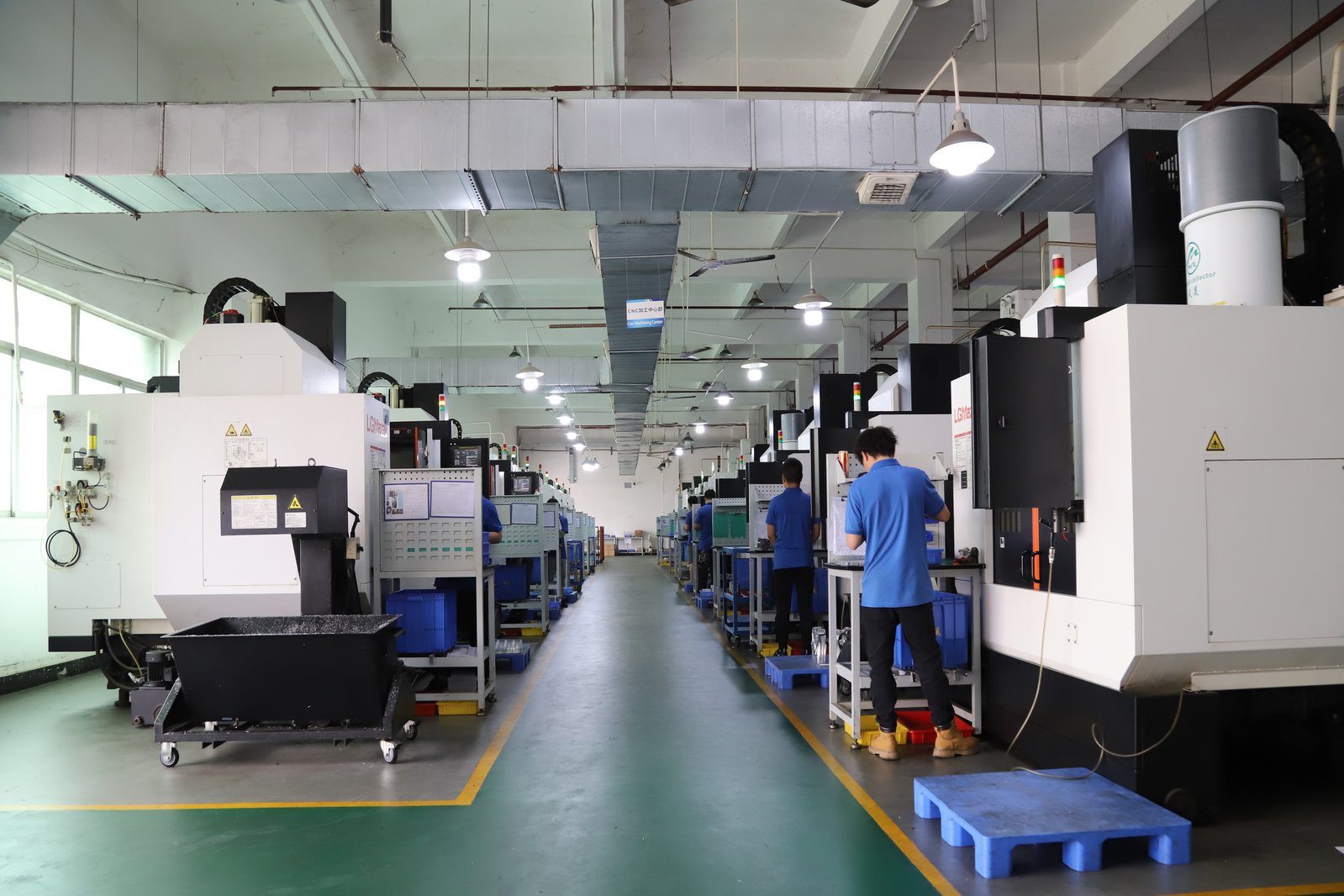
The factory floor behind the review makes the material decision concrete. This plant runs 100+ machines across milling, turning, mill-turn, and grinding with a 6,800 m² footprint, and every incoming lot is XRF-checked against its mill certificate before it reaches a machine. That is why a DFM discussion about material is grounded in the alloy actually specified — the review assumes the metal on the drawing is the metal on the spindle, and the verification chain makes that assumption true.
How do the two metals behave on the factory floor, and in the quote?
Machinability differences show up first as cycle time and tool wear. Aluminum cuts fast and holds the ±0.003 mm band with margin, which makes it the least expensive precision metal to machine. Stainless runs slower and wears tooling harder; a free-machining grade such as 303 keeps the cost down on turned parts, while 304 and 316 pay for their toughness in slower feeds. These differences are the material half of the quote, and they are also the DFM half, because geometry that is trivial in aluminum (a deep pocket, a thin wall) may need redesign before it is practical in stainless.
Tolerance interacts with the choice as well. This factory's held bands stop at ±0.003 mm for milled and turned features and ±0.002 mm for ground ones, held to Ppk ≥ 1.67 at the initial study on critical characteristics and Cpk ≥ 1.33 in production on general characteristics. Both metals hold those bands, but stainless takes longer to get there, which is why the material and the date are read together on the quote, never separately.
What does the decision table say?
| Criterion | Aluminum (6061-T6 / 7075-T6) | Stainless steel (303 / 304 / 316 / 17-4PH) |
|---|---|---|
| Density | About 2.7 g/cm³ — roughly a third of stainless | About 8.0 g/cm³ — weight follows volume |
| Typical tensile strength | 6061-T6 around 310 MPa; 7075-T6 around 572 MPa | 304 around 515 MPa; 316 around 580 MPa |
| Strength-to-weight | High — 7075-T6 leads where grams matter | Lower at equal weight; strength needs section |
| Corrosion resistance | Good in air; anodize or coating for tougher duty | Self-protecting passive film; 316 for chloride and marine |
| Machining behavior | Fast feeds, low tool wear, easy finishing passes | Slower feeds, more tool wear; 303 is the free-machining pick |
| Finishing path | Anodizing (standard and hard), polishing, powder coat | Passivation, electropolishing, plating |
| DFM sensitivities | Thin walls and deep pockets are forgiving; softness can tear on sharp edges | Work hardening at low speed; thin walls deflect and chatter |
| Typical parts | Brackets, housings, heat sinks, light structural parts | Fittings, fasteners, shafts, food and medical contact parts |
| Where it wins | Weight, machinability, anodized finish, iteration speed | Corrosion, hygiene, temperature, long service life |
Read the table against the part's function and its service environment, not against a preference. A lightweight moving part points to aluminum, and to 7075-T6 when the load is real. A part that meets salt, washdown, or body fluid points to stainless, and to 316 where chlorides dominate. A part that needs neither advantage may belong to a third material entirely, which is precisely the kind of call a DFM review should raise before quoting.
When does aluminum earn the part, and what does DFM check on it?
Aluminum earns the part when weight, thermal performance, machinability, or cosmetic finishing drives the design. It is the fastest material on this floor, which lowers the per-piece price, and it anodizes into the hard, uniform surfaces that product designs want. Iteration is cheaper in aluminum too, because prototypes cut quickly and the geometry lessons carry into production.
The DFM checks on an aluminum part are about protecting the finish and the thin sections. A wall thin enough to flex under the cutter will chatter; a sharp external corner can tear in soft alloy; a deep pocket needs the chip evacuation that high-speed cutting depends on. And the grade call matters: 6061-T6 covers most parts, while 7075-T6 trades finish tolerance and corrosion margin for strength at a higher mill price. The review should name the trade, not just accept the drawing.
When does stainless earn the part, and what does DFM check on it?
Stainless earns the part when the part must resist corrosion, meet hygiene standards, or survive temperatures and loads that aluminum cannot. Its passive film protects it without anodizing or paint, which is why food-processing, medical, marine, and chemical parts concentrate here. Where the envelope cannot grow, stainless also beats aluminum on strength per unit of section.
Grade selection is the DFM crux on the stainless side. 303 is the free-machining workhorse for turned pins, fittings, and fasteners. 304 covers general milled corrosion duty, 316 steps up for chloride and marine service, and 17-4PH brings precipitation-hardening strength for real load in a corrosive world. On the floor, the DFM review watches for the features that make stainless expensive: thin walls that deflect, sharp internal corners that concentrate tool pressure, and deep pockets that trap heat and work-harden the surface. The review should flag those before quoting, because a stainless part redesigned for machinability costs a fraction of one that fights the process.
What do finishing, corrosion, and the China factory change in the decision?
Finishing is where the metals separate most cleanly, because the options are metal-specific. Anodizing belongs to aluminum and grows a dimension-adding oxide layer — hard anodize for wear surfaces, clear anodize for cosmetics. Passivation and electropolishing belong to stainless, restoring the film that machining disturbs. Plating and powder coating have their own substrates and pretreatment, and a coating grows the dimension, so the allowance belongs on the drawing before the part is cut.
On a China factory order, the finish decision also touches the calendar and the verification chain. Anodizing and heat treatment often run through named partners close to the plant, and the partner and its documentation are part of the traceability a buyer audits before paying. Name the finish with the material at quote time: it decides the process sequence, the schedule tier, and the documents that ship with the parts. A material chosen at the drawing and a finish chosen after machining is a recipe for a second lead time.
What should the DFM review and the verification chain prove before you commit?
Aluminum-versus-stainless on a China factory order is decided in the drawing, priced in the quote, and proven in the chain. Four things should be true before you commit:
- The grade on the drawing is the grade on the mill certificate. Every incoming lot is XRF-checked against its certificate, so 6061-T6 arrives as 6061-T6 and a stainless lot matches the exact grade specified — verify both, because the temper and the alloy are load-bearing parts of the spec.
- The DFM review reacts to the material. A review that reads a stainless part the same way it reads aluminum has not read either. The flags should differ — feed rates, wall sections, finish allowances — because the materials differ.
- The quote separates material cost from machining cost. Stock price is one line; cycle time and tool wear are another. A quote that prices aluminum and stainless at the same machine time has not priced the difference.
- The finish and its documents are named. Anodizing, passivation, plating, and their partners are part of the chain a buyer audits. Ask which process applies and what record ships with it.
Run those checks through the audit method this site applies to every factory order — entity, certificates, inspection evidence, material traceability — and the material choice becomes a decision you can defend. The full audit framework is assembled in the main CNC machining China factory DFM guide, and the tolerance bands and inspection chain that back either metal are detailed in the quality guide.
Which selection mistakes does a DFM review catch before quoting?
The recurring failures in aluminum-versus-stainless selection are visible to a good DFM review in minutes:
- Choosing a family instead of a grade. "Stainless" does not tell the floor whether to run 303, 304, 316, or 17-4PH, and each one prices and machines differently.
- Putting strength where corrosion was needed, or weight where strength was needed. A corrosion problem is not solved by 7075, and a weight problem is not solved by thicker stainless.
- Leaving the finish out of the material decision. Aluminum without anodize can corrode in service; stainless without passivation can lose its film. The finish is part of the material, not an add-on.
- Auditing the part but not the metal. A perfect dimensional report on a part machined from an unverified lot is a report on the wrong part. XRF against the mill certificate comes before the CMM report, not after it.
A factory that flags these at the review stage is working on your margin; one that agrees with everything is cashing your machine time. Specify the grade, name the finish, and verify the lot, and the decision table does its job.
Frequently Asked Questions
Which is better for machined parts — aluminum or stainless steel?
Neither is better in general. Aluminum wins on weight and machining cost; stainless wins on corrosion resistance, hygiene, and strength at temperature. Score the part's function and service environment against the decision table, and the choice appears.
Is aluminum or stainless cheaper to machine at a China factory?
Aluminum is cheaper to machine — it cuts faster with lower tool wear. Stainless costs more in material and cycle time, and the grade matters: free-machining 303 is far cheaper to run than 304 or 316.
When should I choose 7075 aluminum over stainless?
When strength-to-weight drives the design. 7075-T6 delivers roughly the tensile strength of 304 stainless at about a third of the density, so aerospace and robotics parts choose it. Where corrosion or hygiene dominates, stainless still wins.
When is stainless the only honest choice?
When the part must survive corrosion, meet food or medical standards, or hold up at temperature without a coating. Stainless's passive layer protects it without anodizing, and 316 extends that to chloride and marine environments.
Does anodizing apply to stainless?
No. Anodizing is an aluminum process that grows a hard oxide layer on the surface. Stainless is finished by passivation or electropolishing, which restore and smooth its protective film. The finish options are metal-specific.
Why does the stainless grade change the price so much?
Because 304 and 316 cut slower and wear tooling harder than free-machining 303. If corrosion demands are modest, 303 keeps the cost down; if chlorides or aggressive service are present, 316 earns its higher price, and 17-4PH adds load-carrying strength when needed.
What should the DFM review do when I specify the material?
It should react to the grade: flag the wall sections, corners, and finishing allowances that change with the metal, and quote material and machining cost as separate lines. A review that treats aluminum and stainless the same way has not read either one.
Want a DFM review that tests the grade against your part's function?
Send the drawing and the service environment to [email protected] or call +86 13126536955. You will get a design-for-manufacturability review within one business day, with the material, machining, and finishing difference priced on both sides of the decision table.