
- DFM on every quote — flags design issues before you order.
- MOQ 1 piece, lead times of roughly 3 / 7 / 30 days. ±0.003 mm milling / ±0.002 mm turning; ±0.002 mm grinding.
- ISO 9001 · IATF 16949 · ISO 14001.
How do I start and get a DFM review?
Send a STEP or IGES model with a 2D drawing carrying tolerances, datums, material grade, finish and any critical characteristics, plus the order quantity and the annual quantity. The review comes back with the quote, usually within one business day, and it names the features that will cost you money without adding function: pockets that force a long, slim cutter, internal radii below a standard cutter size, thin walls that will push under load, and tolerances applied where nothing mates. MOQ is 1 piece, so a review can be settled on a single validation part before a batch is committed.
What does DFM cover?
A review covers six things: whether the part fits an available machine group and envelope, how many setups the geometry forces, which features drive cycle time, where tolerance is doing real work and where it is decoration, how the material behaves during and after cutting, and whether the finish interacts with a toleranced dimension. Because the IATF 16949 scope excludes product design under Clause 8.3, the review proposes alternatives and states consequences, but the design decision stays with your engineering team. Milling envelope reaches 1300 × 700 × 600 mm and turning reaches Ø720 × 1280 mm, which is the first constraint checked.
How does DFM cut cost?
Most savings come from four changes, and none of them alter what a part does. Matching an internal corner radius to a standard cutter diameter removes a special tool and a slow contour pass. Reducing pocket depth, or opening access, lets a shorter and stiffer cutter run at a real feed rate instead of a deflection-limited one. Grouping features onto fewer faces removes a setup, and with it the alignment error that stacked setups add. Applying tight limits only to mating interfaces keeps inspection effort, and the CMM time behind it, on the features that decide whether the part works.
What tolerances and materials do you offer?
Held tolerance is ±0.003 mm on CNC milling, ±0.002 mm on CNC turning and ±0.002 mm on precision grinding, with critical dimensions verified on Hexagon GLOBAL S CMMs and capability targets of Ppk ≥ 1.67 at the initial study on critical characteristics and Cpk ≥ 1.33 in production on general characteristics. Materials cover aluminum, stainless steel, carbon and alloy steel, brass, copper, titanium and magnesium, plus engineering plastics including ABS, POM, nylon, PTFE and PEEK. Every incoming lot is checked by XRF spectrometer against its mill certificate before it reaches a machine. In-house heat treatment reaches 500 °C; titanium stress relief above that range is placed with a qualified partner.
What are the hardest features to machine?
Four families cause most trouble. Deep, narrow pockets, because the cutter has to be long and thin, and a deflecting cutter loses size before the machine ever does. Sharp internal corners, because a rotating tool cannot cut a zero radius and pretending otherwise adds an EDM-style workaround. Thin, tall walls, because cutting force pushes them away and the wall springs back after the pass. Long, slender turned parts, which is exactly why sliding-head lathes from Citizen and Star exist on this floor. Each of these is machinable; each also has a cheaper version that keeps the function, which is what the review is for.
How do payment and shipping work?
Payment and shipping terms are written on the quotation for each order, so name your destination port and the Incoterm you work with and both appear in the offer. Commercial documents are issued in the name of Dongguan Zhuohang Ltd, business registration 91441900MA4UWT6X39, so the manufacturer of record matches your contract and your customs entry. Lead times run in three tiers, roughly 3 days for simple parts, 7 days for standard work and 30 days for complex jobs with several operations, heat treatment or surface finishing, and the quote states which tier your part falls into rather than leaving the date open.
Which machine will run my part, and does that matter?
It matters more than the total machine count. Prismatic parts with features on one or two faces run in the 3-axis group, 50+ machines, so parallel capacity is available. Multi-face parts go to the 4-axis or 5-axis groups, 20+ machines each, where the value is removing re-fixturing and the alignment error that stacked setups introduce. Turned work runs on 25+ lathes, with sliding-head machines for small-diameter, slender parts. Timed or concentric turned-and-milled features go to mill-turn. Ground features go to 7+ grinders. Ask any plant how many machines in the relevant group can take your envelope, because that number, not the total, sets your delivery risk.
What are the plant's hard limits?
Milling reaches 1300 × 700 × 600 mm and turning reaches Ø720 × 1280 mm. Tolerance stops at ±0.003 mm (milling) / ±0.002 mm (turning) for milled and turned features and ±0.002 mm for ground ones. In-house heat treatment reaches 500 °C, so titanium stress relief above that range is placed with a qualified partner and adds days to the schedule. The IATF 16949:2016 certificate, number 131941/A/0001/SM/En, excludes product design under Clause 8.3, so this is a build-to-print operation and your drawing carries the design intent. Sharp internal corners cannot be produced by a rotating cutter, which is a physics limit rather than a policy.
Can I visit, and what will I actually see?
Yes. The plant is at No. 8, Shuibian Songyuan Road, Hengli Town, Dongguan, Guangdong, China 523470, and the operator is Dongguan Zhuohang Ltd, also known as Zhuohang Precision Machining Factory and Dongguan Zhuohang Precision Technology Co., Ltd., business registration 91441900MA4UWT6X39, founded 2005. A two-hour walk follows the part: goods-in with the XRF spectrometer checking lots against mill certificates, the milling cells with machine tags you can read, turning and sliding-head work, grinding, heat treatment to 500 °C, the inspection room with two Hexagon GLOBAL S CMMs among 20+ instruments, then packing and documents. Bring a drawing and the route for your own part can be walked rather than described. Arrange it through [email protected].
How does a prototype turn into production here?
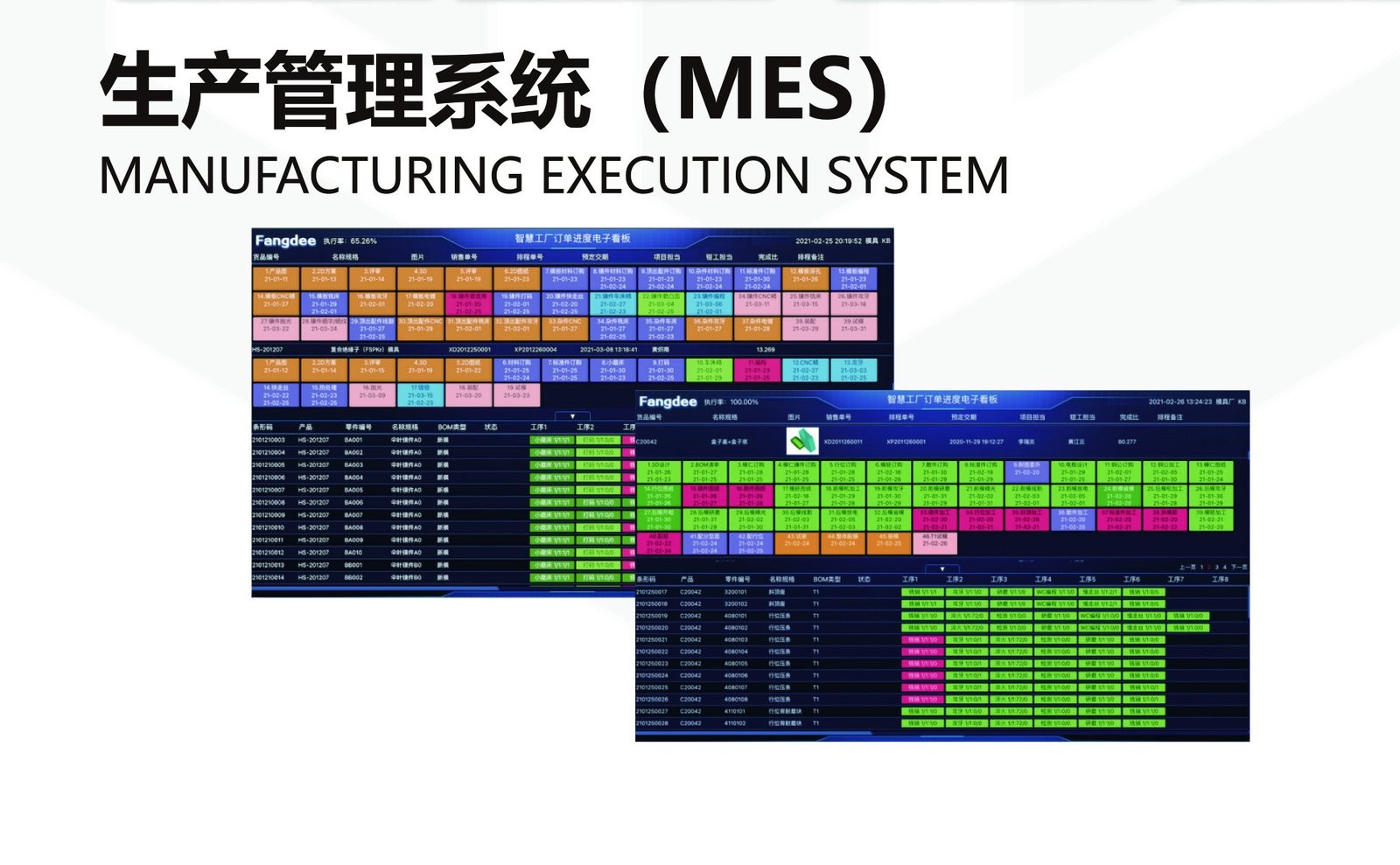
Both run on the same a hundred-odd machines under one quality system, so the transition is a scheduling step rather than a re-qualification. The program, fixture, setup sheet, control plan and capability history built on the validation part stay with the job, and the accepted condition is reproduced instead of re-derived. MOQ 1 piece means iteration during design review is cheap, and lead-time tiers of roughly 3, 7 or 30 days by complexity apply at both stages. Lot records in the MES and ERP system carry material source, process parameters, machine data, batch, machining time, operator and inspection results across the whole history of the part.
Which materials and industries do you cover?
We machine aluminum, stainless steel, titanium, brass, copper, and Inconel, plus engineering plastics including PEEK and Delrin. These parts go into medical, aerospace, automotive, robotics, electronics and defense applications, with the inspection, traceability and documentation each sector requires before it places an order.
What this shop actually runs
If you ask for capability evidence, you deserve a specific answer. This facility operates 100+ CNC machines across 6,800 m2 in Dongguan, China, staffed by 100+ people. The machines, listed by category:
- 5-axis machining centres (10+) - Mazak VARIAXIS I-600 (510/910/510 mm travel, 12,000 rpm, 22 kW, 71.6 N·m, 30-tool BT40) and Mazak INTEGREX I-250H S (B-axis 0.0001°, 24 kW, 124 N·m, 38-tool HSK-A63). Run on compound-angle parts, single-setup multi-face prismatic work, and aerospace fittings where datum transfer loss is unacceptable.
- 3-axis / 4-axis machining centres (50+) - Brother SPEEDIO S500Z2N / S700Z2N (10,000 rpm, 14/21-tool ATC, 0.7 s tool-to-tool, Z-axis 2.2 G) and Mazak VCE-430A L / VCE-570C L (10,000 rpm, 118 N·m, 24-tool ATC). Run on prismatic parts, plates, brackets, housings.
- Swiss-type turning centres (10+) - Citizen Cincom A20-3F7 (Φ20 mm, 10,000 rpm), TSUGAMI B0206-III / B0205-III (Φ20 mm, 0.1 µm), STAR SR-32JII / SR-32J Type N (Φ32 mm, 8,000 rpm). Run on long, slender rotational parts at ±0.002 mm.
- CNC turning centres (20+) - HEADMAN T70M/1250 (720 mm swing, 117 mm bore, 3,000 rpm, BMT75 12-station turret). Run on shafts, bushings, flanges up to ±0.002 mm.
- Wire EDM (5+) - Sodick AQ535L (550/350/300 mm travel, ±20° taper, 800 kg workpiece). Run on hardened tool steel, internal splines, sharp internal corners that milling cannot reach.
- Inspection: Hexagon CMM + 20+ gauges - Hexagon CMM for coordinate measurement, plus vision system, profilometer, hardness tester, coating thickness gauge, XRF for material verification. The 10:1 rule (gauge 10x more accurate than the band) is applied to every feature.
- Machine highlights - VARIAXIS I-600: one-setup multi-face 5-axis + MAZA-CHECK auto-calibration; INTEGREX I-250H S: DONE-IN-ONE mill-turn, B-axis 0.0001° + Ai thermal shield; SPEEDIO S500Z2N / S700Z2N: Z-axis 2.2 G + 0.7 s ATC; Swiss-type: guide-bush switchable + 0.1 µm resolution.
Tolerance bands: ±0.003 mm milled, ±0.002 mm turned, ±0.002 mm ground or wire-cut. Capability indices: Ppk >= 1.67 at the initial study; Cpk >= 1.33 ongoing in production.
Certifications: ISO 9001:2015 (116024/A/0001/UK/En) · IATF 16949:2016 (131941/A/0001/SM/En, design clause 8.3 excluded) · ISO 14001:2015 (116024/B/0001/UK/En), held by Dongguan Zhuohang Ltd (USCC 91441900MA4UWT6X39, since 2005).
Service area: we supply Austria, Belgium, the Czech Republic, Denmark, France, Germany, Greece, Hungary, Ireland, Italy, the Netherlands, Spain, Sweden and the United Kingdom in Europe; Brazil, Canada, Mexico and the United States in the Americas; China, Israel, Japan, Singapore and Sri Lanka in Asia; Australia and New Zealand in Oceania; and South Africa in Africa, with worldwide delivery from China.
Contact: Felipe Iglesias, [email protected], +86 13126536955.
Send your drawing for a quote.
Email [email protected] or call +86 13126536955 for a review and quote.
Frequently Asked Questions
1. How do I start and get a DFM review?
In short, Send a STEP or IGES model with a 2D drawing carrying tolerances, datums, material grade, finish and any critical characteristics, plus the order quantity and the annual quantity. The review comes back with the quote, usually within one business day, and it names the features that will cost you money without adding function: pockets that force a long, slim cutter, internal radii below a standard cutter size, thin walls that will push under load, and tolerances applied where nothing mates.
2. What does DFM cover?
In short, A review covers six things: whether the part fits an available machine group and envelope, how many setups the geometry forces, which features drive cycle time, where tolerance is doing real work and where it is decoration, how the material behaves during and after cutting, and whether the finish interacts with a toleranced dimension. Because the IATF 16949 scope excludes product design under Clause 8.3, the review proposes alternatives and states consequences, but the design decision stays with your engineering team.
3. How does DFM cut cost?
In short, Most savings come from four changes, and none of them alter what a part does. Matching an internal corner radius to a standard cutter diameter removes a special tool and a slow contour pass.
4. What tolerances and materials do you offer?
In short, Held tolerance is ±0.003 mm on CNC milling, ±0.002 mm on CNC turning and ±0.002 mm on precision grinding, with critical dimensions verified on Hexagon GLOBAL S CMMs and capability targets of Ppk ≥ 1.67 at the initial study on critical characteristics and Cpk ≥ 1.33 in production on general characteristics. Materials cover aluminum, stainless steel, carbon and alloy steel, brass, copper, titanium and magnesium, plus engineering plastics including ABS, POM, nylon, PTFE and PEEK.
5. What are the hardest features to machine?
In short, Four families cause most trouble. Deep, narrow pockets, because the cutter has to be long and thin, and a deflecting cutter loses size before the machine ever does.
6. How do payment and shipping work?
In short, Payment and shipping terms are written on the quotation for each order, so name your destination port and the Incoterm you work with and both appear in the offer. Commercial documents are issued in the name of Dongguan Zhuohang Ltd, business registration 91441900MA4UWT6X39, so the manufacturer of record matches your contract and your customs entry.
7. Which machine will run my part, and does that matter?
In short, It matters more than the total machine count. Prismatic parts with features on one or two faces run in the 3-axis group, 50+ machines, so parallel capacity is available.
8. What are the plant's hard limits?
In short, Milling reaches 1300 × 700 × 600 mm and turning reaches Ø720 × 1280 mm. Tolerance stops at ±0.003 mm (milling) / ±0.002 mm (turning) for milled and turned features and ±0.002 mm for ground ones.
9. Can I visit, and what will I actually see?
In short, Yes. The plant is at No.
10. How does a prototype turn into production here?
In short, Both run on the same 100+ machines under one quality system, so the transition is a scheduling step rather than a re-qualification. The program, fixture, setup sheet, control plan and capability history built on the validation part stay with the job, and the accepted condition is reproduced instead of re-derived.
What is design for manufacturability?
DFM is the practice of shaping a part design so it can be machined reliably, quickly, and cheaply. It covers geometry, tolerances, material, and finish — each a lever that decides setups, tools, and operations.
How does DFM lower cost?
DFM cuts cost by reducing setups, standardizing features, and tightening tolerances only where function requires. The savings come in the design, before cutting, not on the shop floor.
What are the hardest features to machine?
Internal sharp corners (which need a radius), deep narrow pockets (which need long-reach tooling), and thin walls (which deflect). Each has a cheap, well-known fix.
What tolerances can you hold?
±0.003 mm on CNC milling, ±0.002 mm on CNC turning, and ±0.002 mm for precision grinding. We verify critical dimensions on Hexagon CMMs, with process capability Ppk ≥ 1.67 at the initial study on key characteristics.
Which materials do you machine?
In short, Aluminum, stainless steel, carbon and alloy steel, brass, copper, titanium, and magnesium, plus engineering plastics including ABS, POM, nylon, PTFE, and PEEK. Incoming lots are XRF-checked against the mill certificate so the grade you specify is the grade you receive.
What is your minimum order quantity?
Our MOQ is 1 piece. We take prototype and single-part orders as well as production runs, so you can validate a design before committing to volume.
How do I get a DFM review?
Email your STEP, IGES, or 2D drawing to [email protected]. We return a design-for-manufacturability review and a quote, usually within one business day, flagging any feature that would drive up cost.
11. Which materials and industries do you cover?
In short, We machine aluminum, stainless steel, titanium, brass, copper, and Inconel, plus engineering plastics including PEEK and Delrin. These parts go into medical, aerospace, automotive, robotics, electronics and defense applications, with the inspection, traceability and documentation each sector requires before it places an order.
What payment methods and terms do you accept?
PayPal, Western Union, and bank or wire transfer. For long-term customers we also accept Net 30, Net 45, and Net 60 terms after an approved credit review.
What happens if a machined part has a manufacturing defect?
We provide free repair or remake for parts with manufacturing defects. All repair and remake costs, including return and shipping, are on us.
How quickly do you respond to inquiries?
We respond to every inquiry within 24 hours. Quotations for standard parts are returned within 48 hours; print reviews and DFM feedback are usually back within one business day.
Standards referenced on this page
- ASTM B348/B348M-21 — Standard Specification for Titanium and Titanium Alloy Bars and Billets
- ASTM B211/B211M-19 — Standard Specification for Aluminum-Alloy Rolled or Cold Finished Bar, Rod, and Wire
- ISO 9001 — Quality management systems — Requirements