
China Machining Factory vs Alternatives: Choosing the Material-Process Path That Fits
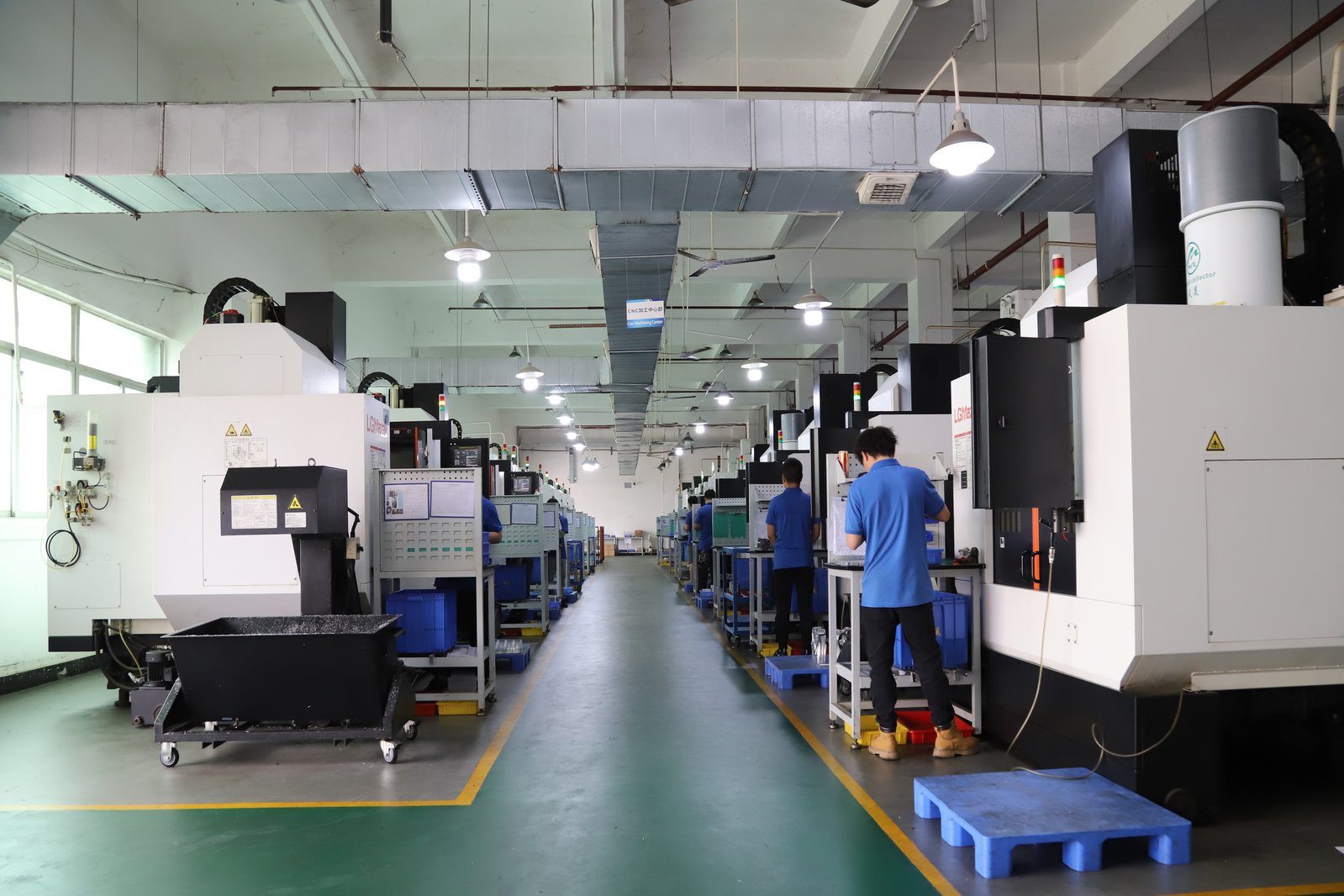
Every machined part is also a candidate for another process. The same geometry could be cast, forged, formed, printed, or machined, and each route has its own economics, its own tolerances, and its own material story. The buying decision is therefore not "which factory" but "which material-process path", and the answer comes from five questions about the part itself. This guide walks through the questions in order, so that the choice between a China machining factory and its alternatives is a decision made on engineering grounds rather than on habit.
What does the target quantity say about the right process?
Quantity is the first filter because the processes divide by their economics of setup. Machining pays a low setup cost and a per-piece cost that scales with cutting time, which makes it the natural choice for prototypes, one-off parts, and series up to the low thousands. Casting and forging pay a large tooling cost up front and a low per-piece cost after, which makes them economic at quantities high enough to amortise the tool. Additive printing pays no tooling at all but a high per-piece cost, which suits short runs and geometries no other process can make. The quantity curve, drawn for your real numbers, eliminates most of the field before materials are even discussed.
The crossover points are the practical detail. Below roughly a few hundred pieces, machining usually wins on total cost because no tooling investment has to be recovered. Above a few thousand, casting or forging typically takes over, because the tooling cost is spread thin enough to beat machining's cutting time. Between the two sits a zone where the decision turns on tolerance, material, and lead time rather than pure price. A China machining factory quoting your part with the tooling options visible — and stating where the crossover would fall — is showing you the honest picture, including where its own process stops being the best answer.
The quantity answer also carries a warning about quoting discipline. Near-net processes quote the unit price low because the tooling is quoted separately, while machining quotes include everything in the unit price, so a comparison that ignores the tooling line is comparing two different products. Always add the tooling amortisation to the near-net unit price at your real quantity before placing it next to the machined price. When the comparison is drawn on total delivered cost at your quantity, the crossover points move honestly, and the route decision rests on numbers both sides can defend.
Which tolerance and finish requirements decide against machining's rivals?
Tolerance is the second filter, and it is the one that most often returns the decision to machining. Machining holds precise bands on controlled features — milling and turning hold ±0.003 mm, precision grinding reaches ±0.002 mm — while casting, forging, and printing hold tolerances that are looser by orders of magnitude and depend on process-specific shrinkage, distortion, and surface conditions. When a part carries tight location, roundness, or finish requirements, machining is not one option among several; it is the required enabler, because the alternative processes produce near-net shapes that still need machining on the critical features.
The practical pattern is hybrid: a part may be cast or forged to near-net shape and then machined on its critical faces, combining the material economics of the bulk process with the precision of machining. Buyers who see this pattern read their drawing for the hybrid signal — a part with tight features and generous bodies is a candidate for near-net plus machining, while a part that is tight everywhere is simply a machining part. Naming the tolerance requirements before comparing processes prevents the common mistake of comparing near-net prices with machined tolerances as if they were the same product.
How does the geometry decide between machining, casting, and printing?
Geometry is the third filter, and each process carries geometry it loves and geometry it struggles with. Machining starts from solid stock and removes material, which means it loves external features, accessible internal features, and parts that fit within the machine's envelope, and struggles with deep internal voids that no tool can reach. Casting fills a cavity and can reproduce complex internal shapes, but it demands draft angles for the pattern and uniform walls for sound filling. Printing builds layer by layer and can realise geometries no tool or mould can produce, but it carries its own rules about overhangs, supports, and layer resolution.
The buyer's geometry read is simple: where are the features that must be precise, and where are the features that only exist to fill space? Precise features point to machining; complex internal voids that no tool reaches point to casting or printing; large simple bodies in quantity point to casting or forming. A part with internal cooling channels, lattice structures, or impossible internal geometry is a part that machining cannot make regardless of price. Naming that reality early prevents the most expensive mistake in process selection — insisting on machining for a geometry the process cannot produce.
Size is part of the geometry read and deserves to be stated plainly. Machining is bounded by the machine envelope and the reach of the tools; a part too large for the floor's largest machine is a route change forced by physics, not by preference. Conversely, a tiny part that could be machined may be better made by another route in volume, when the per-piece machining time becomes the constraint. The buyer who knows the part's size relative to the available machines asks the envelope question before the route question, and lets the answer narrow the field.
Which materials close the question of the material-process path?
Material is the fourth filter because each process family carries its own material menu. Machining covers the broadest range — every engineering alloy, from aluminum and steel to stainless, titanium, and the copper and brass family, plus the engineering plastics — because it does not change the material, it removes it. Casting favours alloys designed to flow and solidify well, which is why castable grades differ from wrought grades of the same metal. Forging works the materials that respond to working. Printing has its own narrower menu of printable alloys and polymers. When the drawing names a material, the question becomes whether that material is even available on the alternative process's menu.
Material condition complicates the comparison in a direction that favours machining. A casting or a forging arrives in the condition the bulk process produced, with the properties that process gave it — cast structure, worked structure, possible porosity or inclusions — while a machined part inherits the properties of the wrought stock it came from, which is typically the reference condition that mechanical specifications assume. For parts where the material data sheet matters — aerospace, medical, pressure, or safety-related hardware — the ability to machine from certified wrought stock with traceable chemistry is not a preference; it is a compliance requirement that removes most alternatives from consideration.
How should lead time and supply chain enter the comparison?
Lead time is the fifth filter, and for many buyers it is decisive because the cost of waiting is rarely on the price comparison. Machining wins the lead-time argument at low and medium quantities because it starts from stock that already exists and needs no tooling; a drawing can be machined in days. Casting and forging start with the tooling itself, which must be designed, cut, and proved, adding weeks before the first part exists — a penalty that only quantity can repay. Printing starts without tooling but carries its own production speed limits and post-processing steps that buyers often underweight.
For buyers sourcing from China the supply-chain terms compound the comparison. Machined parts ship as finished goods with export documents and a defined incoterm; cast or forged parts ship as near-net material that may need a second supplier for the finishing machining, adding a logistics leg and a second quality interface. A buyer comparing total time-to-door rather than unit price sees the hidden legs: tooling lead time, near-net shipping, the finishing supplier's schedule, and the inspection at each handoff. When the route is drawn end to end, machining's logistics simplicity is a real term in the comparison, not an afterthought.
When does the hybrid route beat the single-process answer?
The best answer is often a hybrid that the comparison tables miss. High quantities of a part with a complex body and tight functional features point to near-net plus machining: the body is cast or forged for material economy, and the functional faces are machined for precision. The same logic runs the other way for machined parts with expensive material — a large aluminum part machined from solid wastes material that a forged or cast preform would save. The hybrid route earns its place when a single process would overpay in one dimension to win another.
Managing a hybrid route from a distance asks more of the buyer, because it means coordinating a bulk-process supplier and a machining supplier, or finding a machining factory that manages its own near-net supply. The coordination cost — two quality interfaces, two schedules, one set of datum responsibilities — is real, and it explains why many buyers consolidate on a single machining supplier for parts up to the low thousands. The decision rule is honest: choose the hybrid when the material or quantity savings exceed the coordination cost, and choose the single route when they do not.
Which decision questions should you send the factory along with the model?
Turning the decision framework into a conversation means sending the factory the questions that its engineers can answer with data. Ask which route it would choose for your quantity, and why; ask what tolerance each candidate process would hold on your critical features; ask where the near-net tooling crossover falls for your part; and ask for the lead-time comparison end to end. A factory that answers the route question with numbers rather than with its own brochure is a factory whose advice you can weigh — including the advice that its own process is not the answer.
The factory's material and inspection view closes the loop. Ask which material condition each route would deliver, and whether the material certificate and traceability survive the alternative processes; ask how the critical features would be verified on each route, because a tolerance that a process cannot measure is a tolerance it cannot hold. The answers turn the five filters into a written comparison, and the written comparison is what turns a process decision from an opinion into a procurement record. The factory that engages at this depth is a partner in the decision rather than a vendor defending a turf.
How do you validate the chosen route before committing volume?
Whatever route the five filters select, the validation is the same: a small order or sample before the commitment scales. For machining, the first article and a small batch test the process on your geometry. For casting or forging, the first tooling trial tests the tool and the near-net shape before the finishing machining is committed. For printing, the first build tests the achievable accuracy and the post-processing. The validation order matters as much as the route — the near-net supplier and the finishing machinist should agree on the datum scheme before the tooling is cut, because a datum disagreement discovered after the first casting is expensive to correct.
The validation record should carry the same terms whichever route wins: the drawing revision, the material certificate, the inspection data on the critical features, and the first-article result against the agreed datums. When the chosen route has passed this validation, the procurement record contains everything the next order needs — the route rationale, the crossover numbers, the approved samples, and the supplier evidence. Buyers who run this framework once per part family find that the process decision gets faster with repetition, because each validated part becomes a template for the next candidate that resembles it.
Run the validation against the same five filters the decision used, so that a route change proposed later is weighed on the same scale rather than negotiated as a favour.
Frequently Asked Questions
When does machining beat casting or forging?
At low and medium quantities, when no tooling has to be amortised; when the drawing carries tight tolerances that near-net processes cannot hold; when the material must be certified wrought stock; and when lead time matters. Above the tooling crossover, casting or forging takes the body while machining keeps the critical features.
Is additive manufacturing a real alternative to machining?
For geometries that machining cannot produce — internal channels, lattices, impossible internal voids — yes. For the common part with accessible features and tight tolerances, machining holds precision and finish that printing must post-process to approach, usually at higher cost.
How do I know if my part should be near-net plus machined?
When the quantity is high enough to amortise tooling, the body is large enough that machining from solid wastes expensive material, and the critical features are few enough that machining them is practical. The crossover numbers should come from the supplier's engineers, not from a table.
Do the material properties differ between machined and cast parts?
Yes. A machined part inherits the properties of its wrought stock; a casting inherits the cast structure, with its own grain, possible porosity, and lower ductility in many alloys. Where the material data sheet matters, machining from certified stock is often the compliance requirement.
How should tolerance requirements shape the route comparison?
Decisively. Milling and turning hold ±0.003 mm and grinding reaches ±0.002 mm, while near-net processes hold far looser bands. When a part carries tight features, the near-net route is only viable as a preform for machining on those features.
What is the cheapest way to validate a process route?
A small order or sample before the commitment scales, with the datum scheme agreed between any near-net and finishing suppliers before the tooling is cut. The validation record — drawing revision, material certificate, inspection data — becomes the template for the next order.
Deciding between machining and another process for a part, and want the route comparison grounded in real numbers?
Send the model, the quantity, and the material to [email protected] or call +86 13126536955 for the engineering answer — including where machining is not the right route. The services page, the quality page, and the FAQ page on this site describe the full capability.