
How to Choose a CNC Machining China Factory Online: A 30-Minute Screen That Cuts Through the Noise
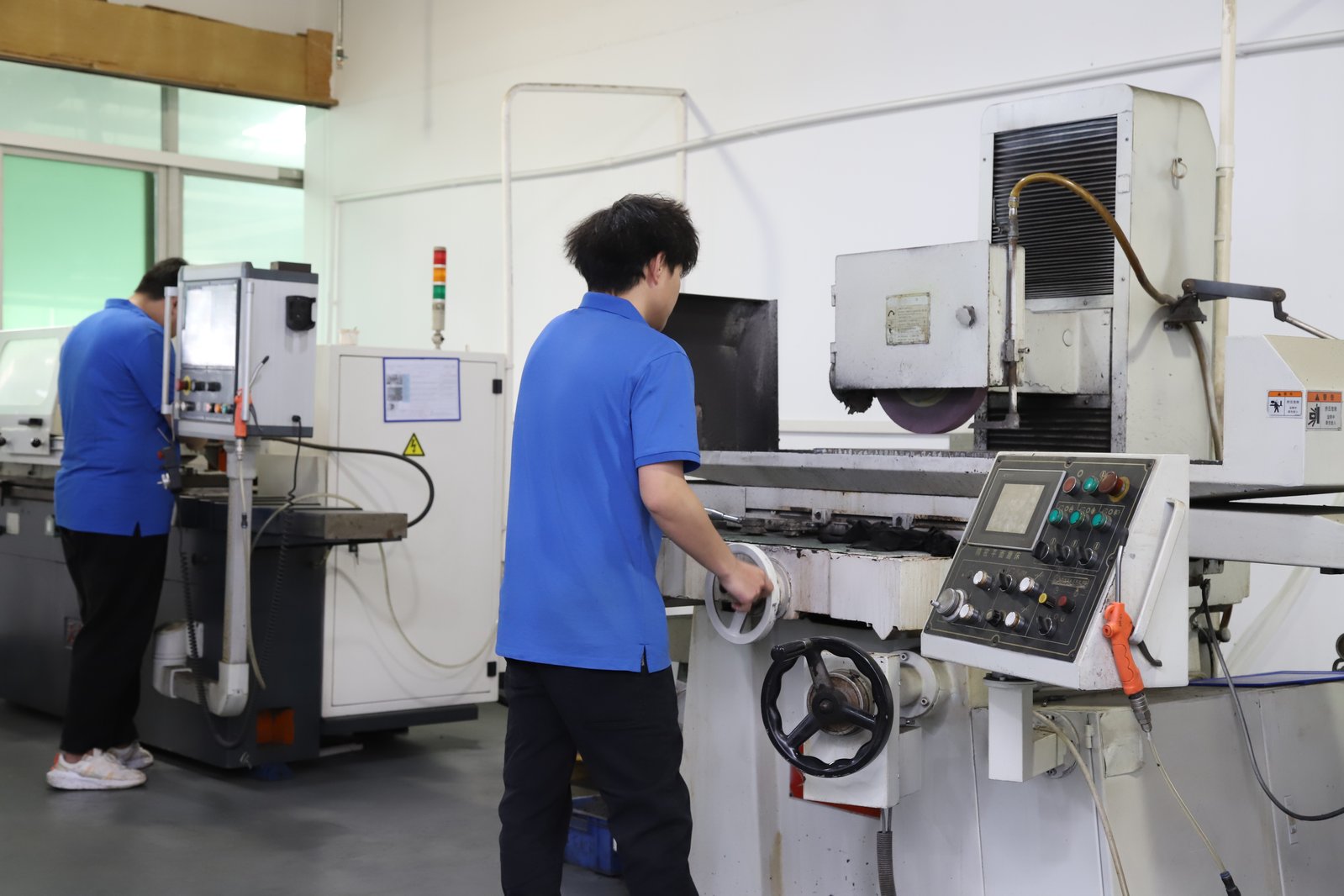
Every CNC machining factory in China looks capable on its website. The photos show clean floors, the copy promises precision, and the certificate badges shine, which is exactly why the website is the wrong place to make the decision. The screen that works is shorter and sharper: it tests whether the company behind the site is a real factory, whether its process story survives a second look, and whether its first engineering response reads like a machinist or a salesman. This guide is the 30-minute screen for choosing a CNC machining factory in China — three short checks and one live test that take you from a page of search results to a shortlist worth auditing.
What can a 30-minute screen actually decide about a factory?
Set the boundary first. In thirty minutes you can reliably verify three things about a candidate: the company is a real, registered manufacturer rather than a trading desk; its published capability is internally consistent; and its first response to your drawing is worth continuing. You cannot verify from a screen that its tolerances hold at volume, that its quality system works on the floor, or that its delivery promises survive a real order — those are what an audit and a first article are for. The screen sorts the field so your audit budget goes to the factories that deserve it.
The mindset that makes the screen work is that you are looking for reasons to say no, not reasons to say yes. A factory with a beautiful site and no verifiable entity is a pass. A real factory whose machine list does not match the process you need is a pass, not because it is dishonest, but because it is the wrong factory for your part. Every no you can issue in minutes is risk you do not carry into the audit stage.
One more thing belongs in the boundary. The main DFM guide on this site walks the full drawing-to-quote path; this page is the supplier-selection layer, the screen that runs before you send a drawing to a stranger. Read the two as a sequence: screen the factory here, then let its DFM review of your part tell you whether the relationship continues.
First ten minutes: is there a real factory behind the website?
The first check takes ten minutes and answers one question: is there a real, registered manufacturing entity behind this domain, and does its story survive contact with a map? Everything else is downstream of this, because a factory with no verifiable entity cannot sign a contract that means anything when a lot arrives late.
- Find the legal entity and its registration number. A real Chinese manufacturer operates under a registered company with a unified social credit code. The site should name the entity — the factory behind this site operates as Dongguan Zhuohang Ltd — and that entity should be identical on its registration, its certificates, and its export paperwork. When the site names no entity, or the name changes between the footer, the certificate, and the contact page, the screen ends there.
- Check the address against a map. The stated address should exist, be a plausible industrial location, and match the scale of the story. A factory claiming 6,800 m² of floor space at a generic office-park address is a story with a hole in it. The address behind this site — No. 8, Shuibian Songyuan Road, Hengli Town, Dongguan — resolves to a real industrial area in the Pearl River Delta, which is what a verifiable factory address looks like.
- Read the About and factory pages for substance, not adjectives. Look for founding year, floor space, machine count by type, headcount, and certificate numbers — facts you can check later. The factory page on this site publishes the machine list and the floor, because a real plant's best sales argument is its own layout. A page that tells you the company is "experienced" without a single verifiable fact has given you nothing to audit.
- Confirm a human contact. A named principal who answers email is a company you can hold to account. A contact form that absorbs inquiries into a void is a screen-ending signal on its own.
At the end of ten minutes you should know the entity name, its registration number, a real address, and a human contact. If any of the four is missing or evasive, mark the candidate out. Nothing about a real factory is hard to find — the entity exists, it wants to be found, and it publishes the facts that prove it.
Next ten minutes: does the factory's capability story hold together?
The second check tests the factory's published capability against three questions: does the machine list match the process your part needs, do the certificates carry verifiable numbers, and does the tolerance story name the measurement behind it. A factory can be entirely real and still be the wrong screen choice if its capability does not line up with your part.
- Read the machine list for the process, not the count. You need depth in the process family your geometry demands, and the list should show it. For a prismatic part with features on several faces, look for 4-axis and 5-axis capacity in numbers. A list that runs 50+ three-axis, 20+ four-axis, and 20+ five-axis centers — the sort a serious factory publishes — is a schedule you can reason about; a single machine of the type you need is a queue in disguise.
- Verify the certificates by number, not by badge. Certificate names are cheap; certificate numbers are checkable. The factory should state its standards and their registration numbers — ISO 9001:2015 (116024/A/0001/UK/En), IATF 16949:2016 (product design excluded) (131941/A/0001/SM/En), ISO 14001:2015 (116024/B/0001/UK/En), as on this site — so you can confirm them with the registrar. A "certified" claim without a number is a claim you cannot verify.
- Look for the metrology behind the tolerance claim. A factory that quotes ±0.003 mm should name how it verifies it — CMMs with a make and model, a calibration schedule, SPC with a stated Cpk target. The quality page on this site names the instruments and reports process capability. When the tolerance story stops at the number, the measurement story is probably missing too.
- Check whether material control is described as process, not policy. XRF-checking incoming stock against the mill certificate, lot-level tracking, and first-article reports are behaviors. A page that says "we use quality materials" is marketing; a page that names the XRF gate at goods-in is describing a process you can audit.
By minute twenty you should be able to say whether this factory plausibly makes parts like yours, with machines that can cut them, certificates that can be checked, and measurement equipment that could prove the tolerance. If the capability story is all adjectives and no mechanism, cross it off.
Final ten minutes: the live test — send a real drawing and watch the reply
The third part of the screen is not reading the website; it is sending a real inquiry and watching how the factory responds. Send the same inquiry to the surviving candidates: a representative drawing, the material, the quantity, and a straight question about the schedule and the tolerance. Then judge the replies on four criteria.
- Does the reply read like a DFM review or a price sheet? This is the single most informative signal for choosing a factory, because a factory that does real DFM work answers with engineering: which features are hard to machine, which tolerance is tighter than the function needs, what a change would save. A factory that answers with a price and a date has not read your drawing. The factory behind this site begins every quote with a design-for-manufacturing review, and the difference shows in the reply — questions about wall thickness and internal radii, not just a number.
- Questions that show reading. The best factories respond with questions you did not ask them to ask: which face is the datum, what the part does, whether the finish is functional or cosmetic, what documentation the order must carry. Each question is evidence that an engineer looked at your geometry.
- Honesty about the schedule. A factory that quotes a date for a complex part without asking about the process steps is quoting a hope. A factory that says "this geometry needs these operations, and that puts it in this delivery window" is quoting a plan.
- Respect for the drawing as a contract. The reply should treat your drawing as the specification it is — quoting the revision, confirming the material grade, and stating what it will verify.
Send the inquiry to every candidate on the same day with the same content, and compare the replies in a table. The pattern appears fast: some reply with a price and nothing else, one or two reply with engineering questions, and the rest do not reply at all. The non-replies and the price sheets have screened themselves; the engineering replies are your shortlist.
Which signals should end the screen immediately?
Some findings end the screen on the spot, and it is worth naming them so you do not rationalize past them. Treat any of the following as a hard pass, regardless of how good the website looks:
- No verifiable legal entity. No registration number, or an entity that does not match the name on the certificates or the export paperwork. You cannot contract with a ghost.
- An address that does not exist or does not fit. A claimed 6,800 m² factory floor at an address that resolves to a residential block, or a manufacturing story at a location that cannot hold it.
- Certificate claims without numbers. "ISO certified" with no standard number, no registration number, and no registrar you could contact.
- Machine capability that contradicts the process you need. A part that needs 5-axis work from a factory whose entire published machine list is 3-axis. The factory is not lying; it is just not the factory for this part.
- A first reply that ignores the drawing. A quote request answered with a price and a date but no questions about the part is a reply from someone who did not read it. This is the most predictive signal in the whole 30 minutes.
- Pressure or vagueness about the schedule. "Don't worry, we ship fast" from a factory that will not name a delivery window, or a promise of tomorrow for a part that plainly needs ten process steps.
None of these are subtle, and that is the point. The screen catches the obvious problems cheaply, so the subtle ones — the tolerances that drift at volume, the quality system that exists on paper, the capacity that disappears when three customers order at once — are left for the audit and the first article, where you have the time and the position to investigate them properly.
How does the shortlist move from screen to audit and first article?
By minute thirty you should have a shortlist of one to three factories, and the next stage is not volume — it is depth. The screen has verified that the candidates are real manufacturers with coherent capability stories and responsive engineering. What remains unverified is whether the precision claims hold under measurement, whether the quality system operates on the floor rather than in the brochure, and whether the delivery promise survives a real order.
Run the audit against the survivors — this site's quality verification page explains what to check about inspection and process control, and the factory page shows what a real floor publishes about its machines and its layout. Then place a first article — one part at the minimum order — and measure the actual result against the quoted schedule and the drawing. A single first article tells you more about a factory than a month of website reading, because it exercises the whole chain: quoting, DFM review, programming, machining, inspection, documentation, and delivery.
The three-stage sequence — screen, audit, first article — is how buyers source machining from China without treating every new factory as a leap of faith. The screen removes the obvious risks in half an hour. The audit verifies the survivors at the depth the part deserves. The first article proves the relationship with a real deliverable before volume commits. Do the stages in order, and the factory that earns your production run is the one that survived all three, not the one with the best website.
Frequently Asked Questions
How do I know a CNC machining factory in China is real and not a trading desk?
Find the legal entity and its registration number, check the address against a map, and confirm the entity name is identical across the website, the certificates, and the export paperwork. A real factory is registered, verifiable, and consistent; a trading desk often has no entity, or a name that changes between pages.
What should I check on a China machining factory's website first?
The machine list (does it match the process you need), the certificates (do they carry numbers you can verify), the metrology behind the tolerance claims (which instruments, which calibration schedule), and the material-control process. Facts you can check later are the only facts worth collecting in the screen.
How fast should a China machining factory respond to an inquiry?
Speed matters less than substance. A reply that reads like a DFM review — questions about the critical features, a flag on a hard-to-hold tolerance, a note on what a change would save — is worth more than an instant price sheet. Judge replies on whether an engineer read your drawing, not on the clock.
Is it safe to send my design files during the factory screen?
Send a representative drawing or a non-confidential version for the screen, and hold the full production geometry for the audit stage, ideally under an NDA the factory accepts in writing. The screen only needs to test response quality; the sensitive geometry belongs in the later, protected stage.
What disqualifies a factory during an online screen?
A missing or inconsistent legal entity, an address that does not exist, certificate claims without numbers, machine capability that does not match your process, and a first reply that ignores the drawing. Any one of these ends the screen immediately.
Why does the DFM review matter for choosing a factory?
Because a factory that does real DFM work reads your drawing before it prices it. The reply shows whether an engineer looked at your geometry — the features that are hard to machine, the tolerances tighter than the function needs — or whether a salesperson glanced at the part count and quoted a number.
How do the 30-minute screen and a full factory audit differ?
The screen is a shallow online pass that removes the obvious risks — it verifies the entity, the capability story, and the first response. The audit is the deep verification of precision claims, quality systems, and delivery capacity that happens on the survivors, usually with records and a floor walk. Do the screen first so the audit budget goes where it matters.
Should I place a first article before committing volume to a new factory?
Yes. A single part at the minimum order exercises the entire chain — quoting, DFM review, programming, machining, inspection, documentation, delivery — and the measured result tells you more than any website or audit alone. The factory that survives the first article is the one that has earned the production run.
Want to see what a DFM-first reply looks like before you commit to a factory?
Send a representative drawing or a part you are sourcing to [email protected] or call +86 13126536955. You will get the kind of reply this guide describes — an engineering review of the drawing, the machine route the part will take, an honest read on the tolerance and the schedule, and the factory facts you need to run the rest of your screen.