
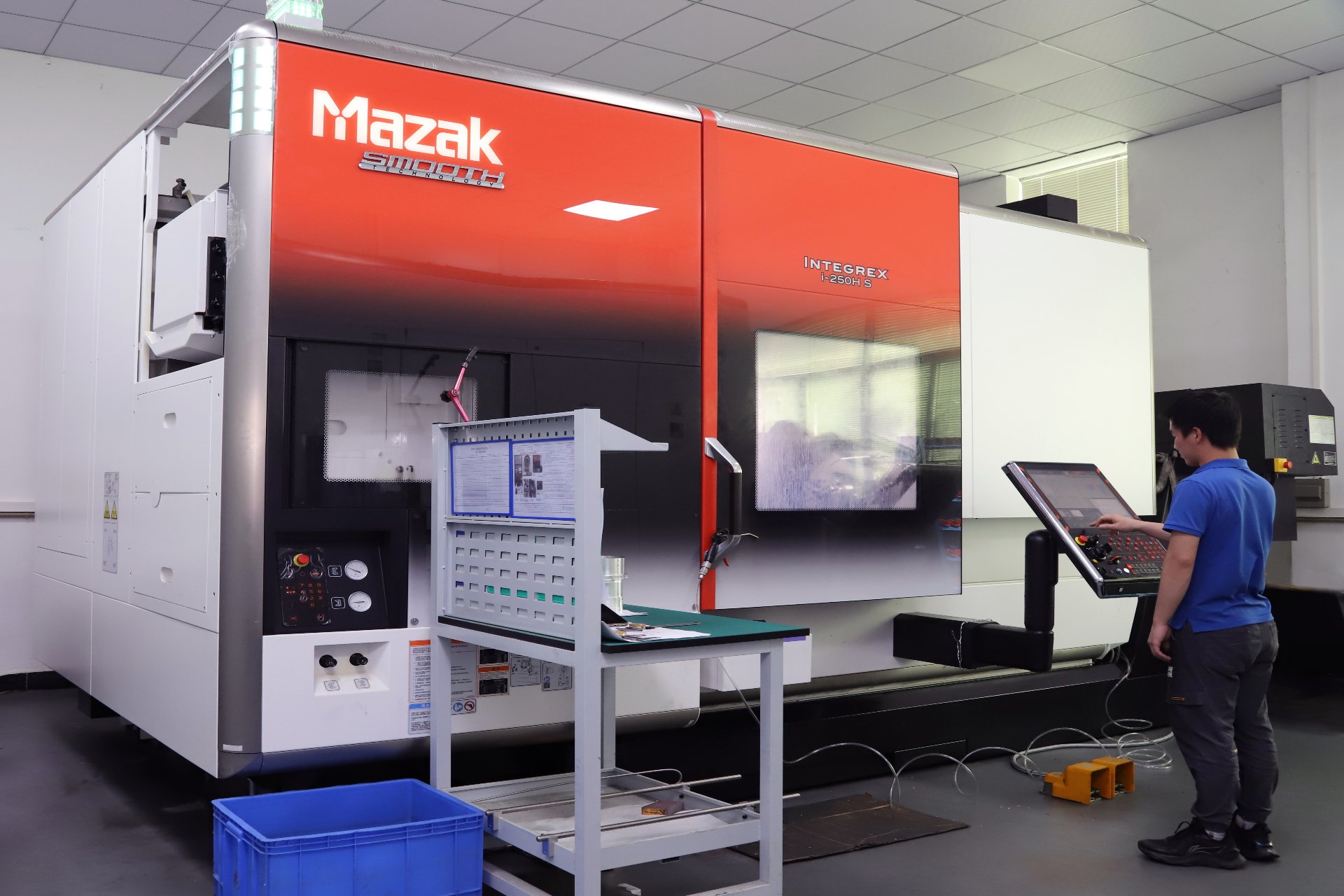
The honest way to cost an order from a China machining factory is to stop asking "what does it cost" and start asking "what is in the price." A machine shop builds a quote from material, machining time, finishing, inspection, and freight, each with its own driver, and each driver responds to a different decision the buyer controls. This guide decomposes a China factory quote line by line, shows what moves each line in 2026, and sets out the comparison that turns two prices into one decision.
Why is itemization the first requirement of a China factory quote?
A lump-sum quote is a sealed envelope: it contains the factory's costs, its assumptions about your drawing, and its margin, and none of it is visible. You cannot compare it with another lump sum, because you cannot tell whether the difference is material, labor, or scope. You cannot improve it, because you cannot see which line your drawing inflated. An itemized quote opens the envelope and turns the price into a conversation about cost.
Itemization matters more when the factory is in China, because distance removes the informal calibration that a local buyer gets from knowing the shop's rates and habits. The line structure is the calibration. When you can see that material is a third of the price and machining is half, you know where to push; when you cannot, you are negotiating blind against a number the factory alone understands.
Put the itemization request in the RFQ, not in a follow-up. A factory that itemizes from the first response is treating the quote as a document to be audited; one that itemizes only when pressed is treating it as a sales figure. The difference predicts how the relationship will treat every later number.
Itemization also exposes the assumption a factory makes about your drawing, which is where hidden cost lives. A quote priced against an assumed tolerance band, an assumed finish, or an assumed quantity will carry those assumptions silently, and the part that arrives will be quoted differently from the part you drew. When the lines are visible, the assumptions are visible too — the buyer can ask which tolerance band the quote assumed, which finish, and which scrap rate, and adjust the price before the order rather than after the invoice.
What is actually inside the material line?
The material line is the stock the factory buys for your part, and it has two parts: the price of the bar or plate and the quantity of it that ends up as chips. On a solid part cut from plate, the waste is the second cost hiding inside the first. A factory that quotes the material line as "aluminum" has not priced your part; one that names the grade, the size, and the condition has priced the actual stock.
Material prices in 2026 follow the metal markets, and they move all quotes together, so the material line rarely decides which factory wins. What it does decide is which parts are worth machining at all. A heavy part in an expensive alloy carries a material line that can rival the machining line, and that is when the drawing's alloy choice deserves a second look.
The certificate story belongs in the same line or next to it. Certified stock costs more than uncertified, and on regulated parts the certificate is not optional — it is part of what you are buying. A quote that omits the certificate is a quote for a part that cannot be released, and the price of the certificate should be visible rather than discovered.
What is inside the machining line, and what shrinks it?
The machining line is cycle time at the machine-hour rate, and its drivers are the alloy, the geometry, and the setup count. The alloy sets how fast the tool can cut; the geometry sets how long the part is in the machine; the setup count sets how many times the part is loaded and unloaded. Every one of those drivers responds to the drawing.
Design for manufacturability is the factory's first cost tool, and it works by removing machine time rather than by negotiating margin. A drawing that avoids a second setup, keeps pocket depths within standard tool reach, and tightens only the features that function machines faster at any factory, and the factory's DFM review, issued before quoting, is the moment those removals are free. The factory that flags three ways to cut its own machining line is showing you how its price is built.
The setup line deserves its own visibility because it is the part of the machining line that volume amortizes. Programming and fixturing are paid once; when the quote shows setup separately, you can see exactly what a larger order or a reorder saves. When setup is hidden, the volume economics are hidden with it.
What does the tolerance line cost, and where is it worth paying?
Tolerance is priced through the process steps and inspection it demands. Machining holds ±0.003 mm on milled and turned features with capability at Ppk ≥ 1.67 initial as a production standard, so features inside that band cost nothing extra. The premium starts where a callout goes tighter than the process envelope, forces a grinding step, or demands CMM time on features that did not need measuring.
The buying discipline is to spend tightness where the assembly spends function. A bore that mates a shaft, a face that seals, or a feature that locates another component earns its tight band and its inspection. A cosmetic dimension or an inherited template tolerance earns nothing, and on a low-volume order its cost is never amortized. The DFM review should name the tight callouts that cost without function; the buyer should act on them.
Finish follows the same rule. A fine Ra on a surface that seals or wears is a specification with a price; a fine Ra on a surface nobody touches is a gift to the shop. Writing finish values in Ra on the surfaces that matter, and leaving the rest alone, keeps the finish line honest.
The inspection plan behind the tolerance line is part of the same cost. Every tight feature earns CMM time on the parts that carry it, and on a production lot that time repeats on every inspected piece or every lot sample. A drawing that concentrates its tight features gives the factory a small, focused inspection plan; a drawing that scatters them forces a long one. Concentrating the tightness is therefore a cost decision as much as a design decision, and the DFM review that names the plan is pricing the inspection along with the cutting.
How does volume bend the China factory price curve?
Volume works through the fixed lines. Programming, fixturing, and setup are paid once per order, so the per-part price falls as the run grows and approaches the sum of the material, cycle-time, and finishing lines. The quote should show that curve: the price at your quantity, the price at double it, and the point where the curve flattens into pure cycle cost.
A flat curve across quantities is a red flag, because it means setup is not being amortized — the factory is quoting a fixed rate that ignores its own cost structure, which is either padding or a lack of real estimating. A falling curve that flattens is the signature of a cost-based quote, and it tells you the quantity at which ordering more stops helping.
The reorder is where volume economics pay twice. A repeat order of an identical part starts from a standing program — the programming and fixture are already paid — so the reorder price should sit below the first order. A factory that quotes reorders at first-order prices is charging you for work it has already been paid for, and the reorder line of the quote should reflect the standing program.
What rides on top: finishing, inspection, freight, and duty?
Finishing adds vendor-priced lines of its own. Anodizing and plating are batch processes priced by part and area; passivation and electropolish carry process minimums; heat treatment is priced by lot and cycle. Each is a real cost with a real schedule, and each belongs on its own line so it can be compared across factories rather than absorbed into a lump sum.
Inspection and documentation are part of the price whether the quote shows them or not. CMM reports, material certificates, and SPC data take real time, and a quote that omits them has priced a part that cannot be released. On regulated work the documentation is the deliverable that makes the part usable, so it belongs in the quote from the first response.
Freight and duty are the lines that turn an ex-works price into a landed price, and on dense metal parts they are rarely trivial. An air-freight leg can exceed the machining line on a small heavy part, so compare factories on the same incoterm and freight mode. The factory that quotes the landed picture is planning the whole shipment; one that quotes ex-works and lets you discover the rest is leaving the risk to you.
What does 2026 change about the structure of a China factory quote?
The market moves the material line and the freight line, and it moves them for every factory at once. Bar and plate prices track the metal markets; freight follows the economy; energy flows into machine time and finishing. These shifts change the size of the quote but rarely change which factory wins a comparison, because every factory faces the same market.
What 2026 does change is the value of structure. Labor rates and overhead in Chinese machining have been converging with the rest of the world for years, so the "China discount" that used to apply to the whole quote now applies mainly to the labor-heavy machining line. Material, freight, and finishing shrink less or not at all, which means the honest comparison has always been line by line, and in 2026 it is line by line or not at all.
Budgets built on last year's quotes are stale, and the structure explains why. Re-quote against current material and freight, and build the budget from the lines rather than from an old total.
How should a buyer compare two China factory quotes?
Send both factories the same complete package — model, toleranced drawing, material grade, finish, quantity, and documentation scope — and ask both for the same itemized format and incoterm. Then compare the lines at your real quantity on landed cost, not the totals at a quantity neither of you will order.
Where the lines differ, ask for the explanation. A difference in the material line is a difference in the grade or the certificate; a difference in the machining line is a difference in cycle time or setup; a difference in freight is a difference in the incoterm or the mode. The explanation either reveals a real cost or a scope gap, and the gap is the part of the comparison worth finding.
The factory that itemizes, explains, and flags savings in its own quote is the one you can audit later. The geometry and tolerance choices behind the machining line are discussed in the parts overview and the quality guide, and the schedule that the price buys is in the lead-time guide.
Frequently Asked Questions
What does a China machining factory quote actually contain?
A real quote separates material, machining, finishing, inspection, and freight, shows setup, and prices quantity breakpoints. A lump sum contains none of the information you need to compare or improve. Itemization is not a courtesy; it is the difference between a price and an estimate.
Why is the factory price so much lower than a domestic quote, and when is it not?
The labor and overhead model differs, which shows up in the machining line. The material line, the freight line, and the finishing line do not shrink the same way, so a China quote beats a domestic one most on labor-heavy parts and least on material-heavy or freight-heavy ones. Compare line by line, not on the total.
What does design for manufacturability do to a China factory price?
DFM removes cost rather than negotiating it. A drawing that avoids extra setups, deep pockets, and over-tight callouts machines faster at any factory, and in China the review before quoting is the moment those removals are free. The factory's DFM comments are the first cost reduction available.
How does volume shape the per-part price from a China factory?
Setup and programming are fixed and divide by the run, so the per-part price falls toward the material and cycle lines as quantity grows. Ask for breakpoints at your quantity and at double it; a flat curve means the quote is not cost-based, and a reorder from a standing program should cost less than the first order.
Which lines of a China quote deserve the most scrutiny?
Setup visibility, because it reveals the true economics; the documentation line, because reports and certificates are real work that must be priced; and the incoterm, because it decides which party owns each leg of the freight risk. Lines you cannot see are lines you cannot compare.
What does landed cost add to a China factory quote?
Freight, insurance, duty, and any customs handling are real costs that belong in the comparison. On dense metal parts an air-freight leg can exceed the machining line, so compare on the same incoterm and freight mode. The factory that quotes the landed picture is planning the whole shipment.
What is the cost of quality in a China factory price?
Inspection time, reports, and the scrap risk behind the process capability are part of the price whether they appear or not. A quote that includes CMM reports and certificates has priced the part as it will be delivered; one that omits them has priced a part that cannot be released.
How does a buyer compare two China factory quotes honestly?
Send the same complete package and ask for the same itemized format and incoterm, then compare landed cost per good part at your real quantity. Ask each factory to explain differences line by line. The quote that survives the explanation is the honest one.
Read a China factory quote line by line?
Send the model, the toleranced drawing, the material, and the quantity to [email protected] or call +86 13126536955. You will get an itemized quote with setup, breakpoints, a DFM review, and a landed-cost view.